- Sunrise Stat
- Posts
- 🌅 How January 1 Became the New Year
🌅 How January 1 Became the New Year

Sunrise Stat
December 31, 2025
Uncover the power of a single statistic: Sign up for Sunrise Stat to find your intellectual clarity.
SOURCE
WHAT TO KNOW
In February 1582, Pope Gregory XIII issued an edict declaring a new calendar would go into effect that October, ending the 1200-year reign of the widespread Julian calendar, established by Julius Caesar in 45 BCE. The change was necessary as Caesar’s astronomers had miscalculated the amount of time it takes the Earth to orbit the Sun by about 11 minutes, causing the Julian calendar to drift away from an accurate solar year by about three days every four centuries.
WHY IT MATTERS
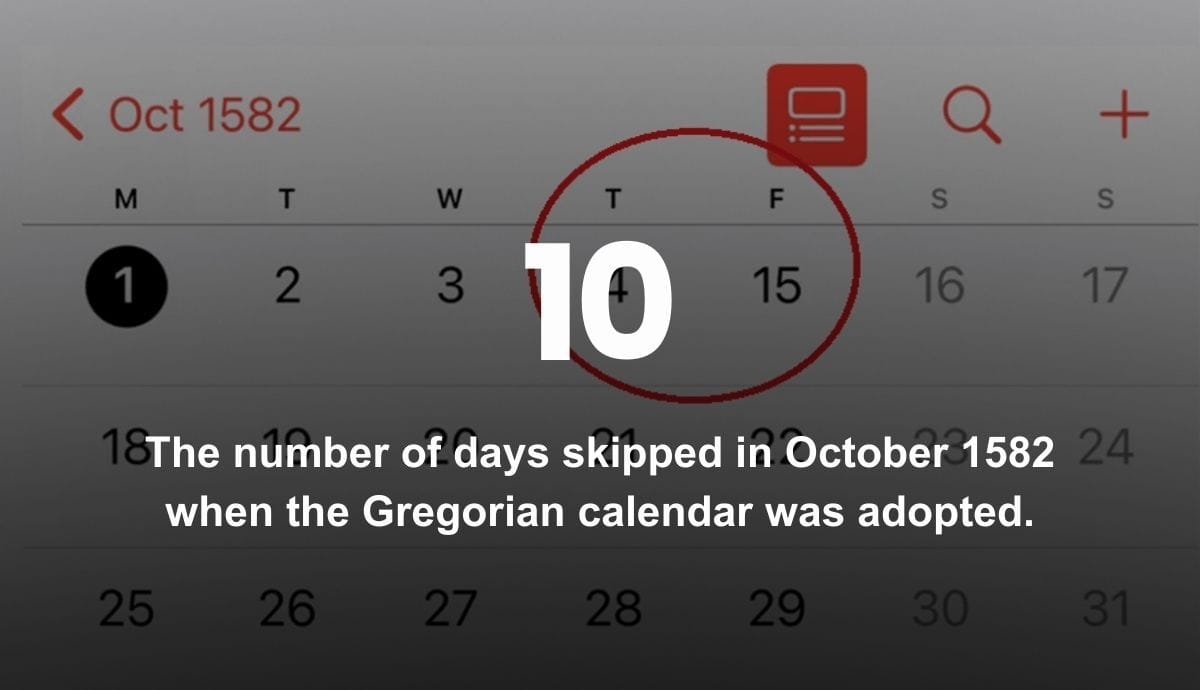
By the 1580s, that 11-minute drift amounted to a 10-day error, causing seasons to shift and forcing several religious festivals and holidays into misalignment. To fix the error, Pope Gregory did two things: First, he deleted 10 days in October 1582, declaring October 4 would directly precede October 15. Second, he tweaked Caesar’s leap years, going from all years divisible by four to all years divisible by four other than century years, which only count as a leap year if they’re divisible by 400. Thus, the years 1700, 1800, and 1900 weren’t leap years under the Gregorian calendar, but 1600 and 2000 were, and 2400 will be next.
CONNECT THE DOTS
The modern widespread adoption of the Gregorian calendar has also made its January 1 start date—established by the Juilian calendar—the beginning of the new year for most of the world (March 1 marked the first of a Roman year prior to the Julian calendar). However, Pope Gregory’s edict was also a point of religious controversy when it was announced, with many Christian countries declining to adopt the new calendar for varying periods of time. For example, Britain and its colonies stuck to Julian leap years and a March 25 start date until 1752, by which time 11 rather than 10 days had to be left out to compensate for the Julian calendar’s drift.