- Sunrise Stat
- Posts
- 🌅 Urban Raccoons Show Early Signs of Domestication
🌅 Urban Raccoons Show Early Signs of Domestication

Sunrise Stat
March 16, 2026
Uncover the power of a single statistic: Sign up for Sunrise Stat to find your intellectual clarity.
SOURCE
WHAT TO KNOW
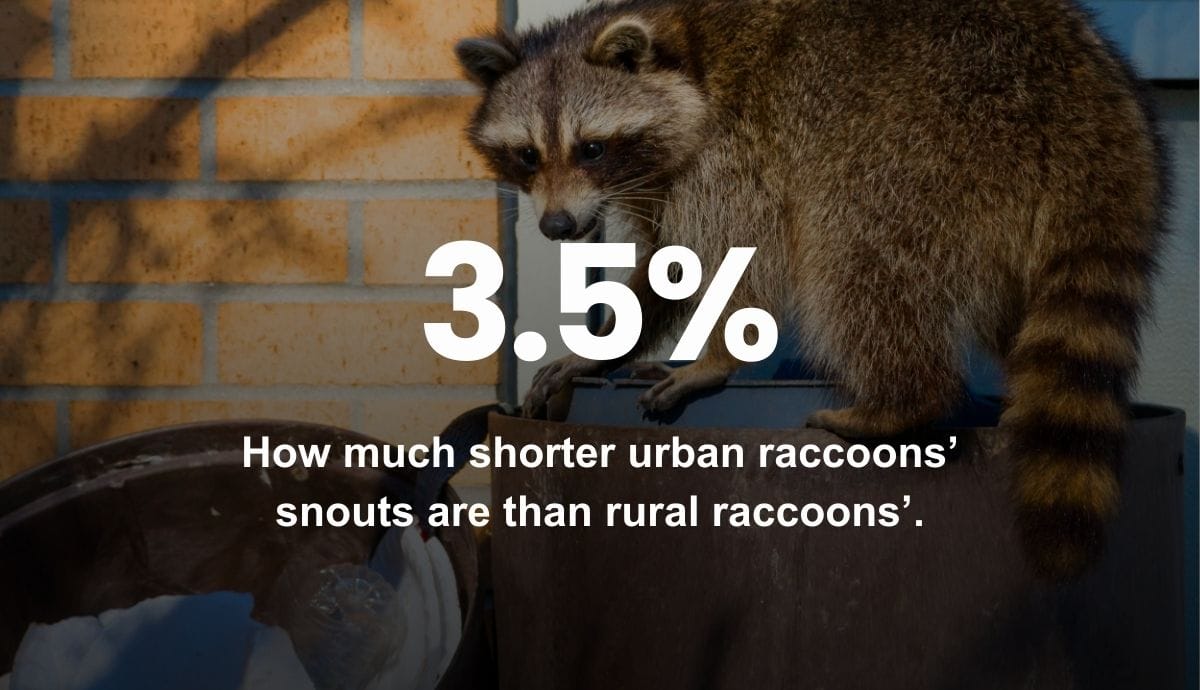
A recent study by researchers at the University of Arkansas at Little Rock analyzed 20,000 images of raccoons in the U.S., finding those living in urban areas have snouts that are about 3.5% shorter than their rural cousins. The researchers say the shorter snout length is a telltale sign of domestication among urban raccoons.
WHY IT MATTERS
The study suggests domestication doesn’t require direct human involvement and can happen as animals become more adapted to human environments. The authors say trash produced by humans kickstarts the domestication, as animals simply have to deal with our presence and avoid aggression to feast on the bounty we throw away. Beyond raccoons, the earliest dogs also dug through human trash, while cats feasted on the mice that gathered around refuse.
CONNECT THE DOTS
Shorter snouts are one of a handful of physical characteristics commonly associated with animal domestication, including smaller heads, floppy ears, curly tails, and white patches on fur. The occurrence of these characteristics is known as domestication syndrome, which scientists believe is connected to a process during early embryonic development that leads to mutations causing physical changes that increase an animal’s chance of survival when living near humans.