- Sunrise Stat
- Posts
- 🌅 This Microrobot Can Save Lives
🌅 This Microrobot Can Save Lives

Sunrise Stat
December 10, 2025
ETH Zurich
Uncover the power of a single statistic: Sign up for Sunrise Stat to find your intellectual clarity.
SOURCE
WHAT TO KNOW
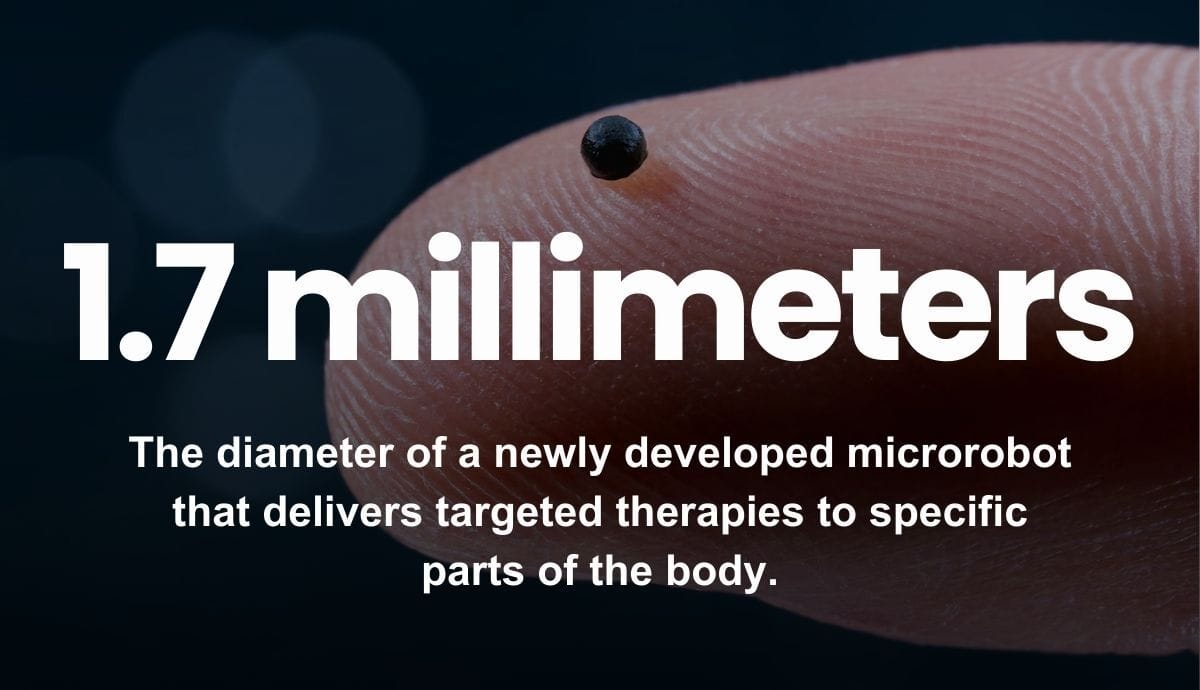
Researchers at ETH Zurich in Switzerland created a microrobot the size of a grain of sand that can be controlled by magnets to deliver drugs to precise locations in the body. The microrobots are made of gelatin and magnetic nanoparticles, and get inserted into the bloodstream through a specialized catheter. Once in the bloodstream, doctors guide the robot through the body at about 4 millimeters per second using weak magnetic fields. When it arrives at the proper location, the magnetic fields are rapidly flipped, warming the gelatin until it melts and releases the drug.
WHY IT MATTERS
One problem when taking medication is that it spreads throughout the entire body instead of going directly to the needed area. The issue is common with chemotherapy drugs, of which only about 0.7% make it to the targeted tumor. The researchers say their microrobots can bring therapies directly to tumors and blood clots, and can help treat aneurysms, aggressive forms of brain cancer, and localized infections. The microrobots can also help avoid side effects often associated with drug treatments, which the authors say are responsible for nearly a third of all drug failures during clinical trials.
CONNECT THE DOTS
The microrobots aren’t the only tiny device doctors are using to help improve people’s lives. A new study by researchers at the University of Washington describes a clinical trial in which a microchip implanted behind patients’ eyes helped restore vision loss due to age-related macular degeneration. Without getting lost in the weeds, the implant—which is about as thick as a human hair—uses a special pair of glasses fitted with a camera to send images into the patient’s brain.