- Sunrise Stat
- Posts
- 🌅 Surviving 48 Hours with No Lungs
🌅 Surviving 48 Hours with No Lungs

Sunrise Stat
March 24, 2026
Northwestern Medicine
Uncover the power of a single statistic: Sign up for Sunrise Stat to find your intellectual clarity.
SOURCE
WHAT TO KNOW
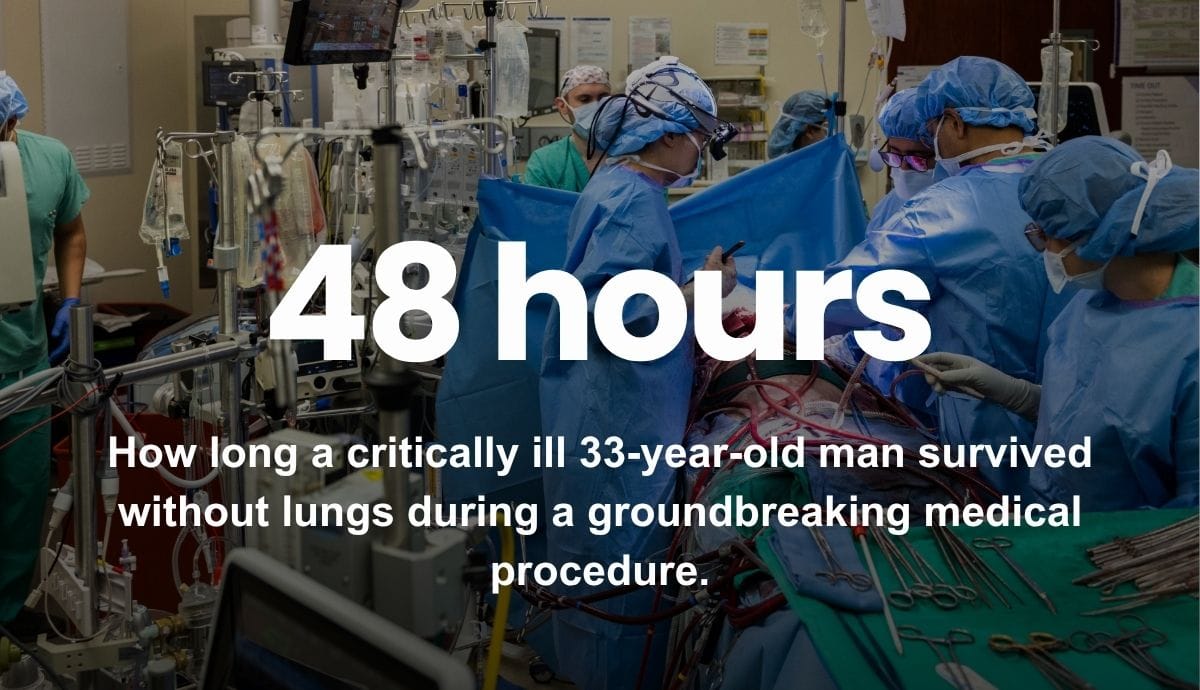
A new study by researchers at Northwestern University describes how a critically ill 33-year-old man whose lungs had liquified due to infection was kept alive using an artificial lung system for 48 hours until a set of donor lungs became available for transplantation. The patient developed acute respiratory distress syndrome (ARDS) triggered by the flu, which worsened and caused multiple organs to fail, making a double lung transplant his only chance of survival. However, since his body wasn’t stable enough to immediately handle a transplant, doctors developed an artificial system to stabilize him.
WHY IT MATTERS
The medical team developed an external lung system designed to temporarily take over the lungs’ role in the body. The highly specialized system oxygenated the patient’s blood, removed carbon dioxide, and supported circulation, allowing the heart and other organs to continue functioning despite the lack of lungs inside the man’s body. More than two years after the successful double transplant, the patient is living a normal life with healthy lung function.
CONNECT THE DOTS
Lung transplantation is typically reserved for patients with chronic conditions, while people with severe ARDS are kept on support under the belief that the lungs will get better over time. However, the authors of the present study say their examination of the removed lungs revealed scarring and damage that suggested the tissue could not recover, meaning transplantation could be a lifesaving option to treat severe lung damage caused by respiratory infection. The authors hope their work can be developed into more standardized systems that help keep patients alive while they wait for donor lungs. “In my practice, young patients die almost every week because no one realized that transplantation was an option,” said one of the study authors.