- Sunrise Stat
- Posts
- 🌅 Rome’s New Metro Station Doubles as a Museum
🌅 Rome’s New Metro Station Doubles as a Museum

Sunrise Stat
December 29, 2025
Metro C
Uncover the power of a single statistic: Sign up for Sunrise Stat to find your intellectual clarity.
SOURCE
WHAT TO KNOW
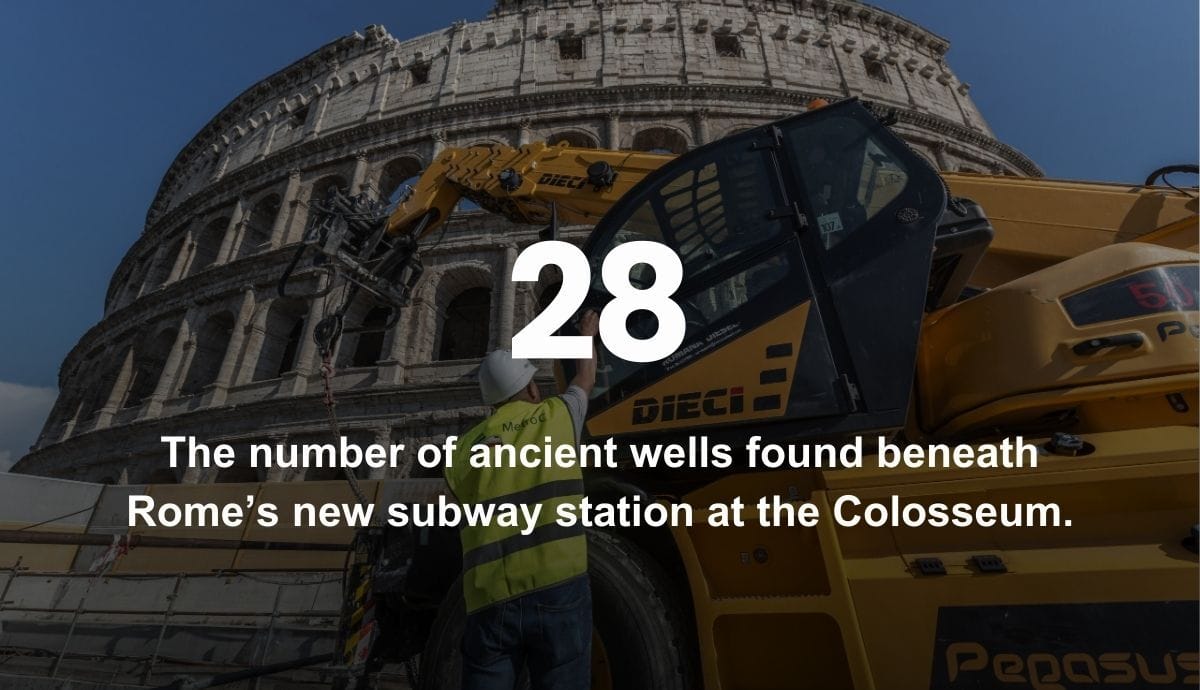
Rome’s third subway line opened to passengers earlier this month, connecting its southern suburbs with the city center after more than a decade of construction. Two new stations are available to commuters, one at the Colosseum and another at the nearby Porta Metronia. Both stops let visitors view the remains of thermal baths, marble decorations, and other artifacts from Rome’s ancient past, including parts of 28 wells found beneath the Colosseum station that predate the construction of the city’s first aqueduct in 312 BCE.
WHY IT MATTERS
Modern Rome sits atop roughly 30 feet of urban debris separating the city from its ancient forebearer, making subway construction uniquely difficult. To construct the two new stations in such sensitive areas, builders sometimes had to turn to more sensitive techniques, like hand digging and brushing, while also using thousands of sensors to ensure the monuments wouldn’t be harmed by vibrations or shifts in the soil. The two new stations also connect to the San Giovanni terminal, Rome’s first so-called “archeostation” that opened in 2017.
CONNECT THE DOTS
Rome’s newest “archeostations” exemplify how modern construction can coexist with historic preservation in the 2,800-year-old city. Extending the subway line is also the latest effort by the city to make itself more suitable for modern inhabitants, with at least four more stations planned to open over the next 12 years. If all goes according to plan, the line will eventually extend to St. Peter’s Basilica in Vatican City.