- Sunrise Stat
- Posts
- 🌅 The Banned but Still Used Pesticide Linked to Parkinson’s
🌅 The Banned but Still Used Pesticide Linked to Parkinson’s

Sunrise Stat
April 02, 2026
Uncover the power of a single statistic: Sign up for Sunrise Stat to find your intellectual clarity.
SOURCE
WHAT TO KNOW
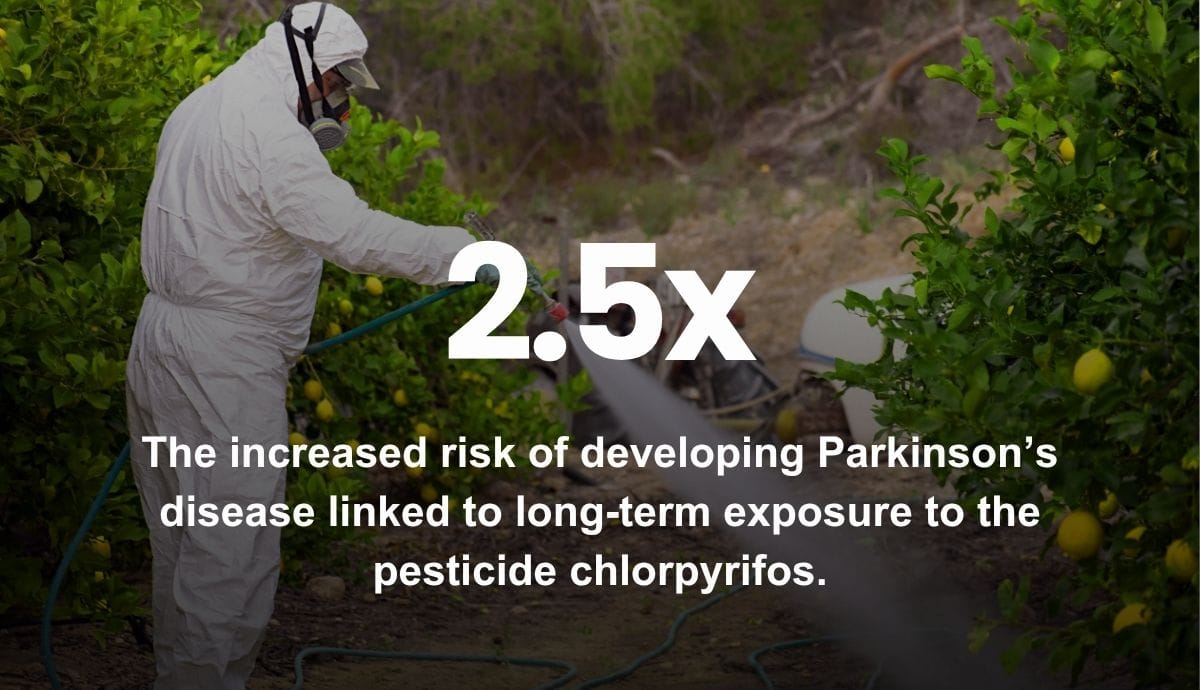
A new study by researchers at UCLA Health found long-term exposure to the pesticide chlorpyrifos is linked to a 2.5 times increased risk of developing Parkinson’s disease. The study combined large-scale data analysis and laboratory experiments suggesting the chemical harms dopamine neurons and disrupts the brain’s ability to clear damaged proteins, a key process in Parkinson’s. The work is the latest to support a connection between pesticides and Parkinson’s disease, and goes further by establishing chlorpyrifos as a specific environmental risk factor.
WHY IT MATTERS
Chlorpyrifos has been widely used in agriculture for decades. The U.S. Environmental Protection Agency banned the residential use of the pesticide in 2001 and, following statewide bans by Hawaii, California, and New York, restricted its agricultural use in 2021. However, it continues to be used on several food crops in the U.S. and is still widely applied in other countries.
CONNECT THE DOTS
Parkinson’s is the world’s fastest growing neurological disease and there is no cure. While the exact cause of Parkinson’s isn’t yet known, scientists broadly believe environmental factors like exposure to pesticides and pollution play a significant role. In March, agricultural giant Syngenta announced it will stop producing a different pesticide linked to Parkinson’s disease called paraquat. The decision comes as the company is facing thousands of lawsuits brought by individuals in the U.S. alleging they developed Parkinson’s after being exposed to paraquat weed-killing products.