- Sunrise Stat
- Posts
- 🌅 Mexico’s Monarch Butterfly Population Is Up
🌅 Mexico’s Monarch Butterfly Population Is Up

Sunrise Stat
March 30, 2026
Uncover the power of a single statistic: Sign up for Sunrise Stat to find your intellectual clarity.
SOURCE
WHAT TO KNOW
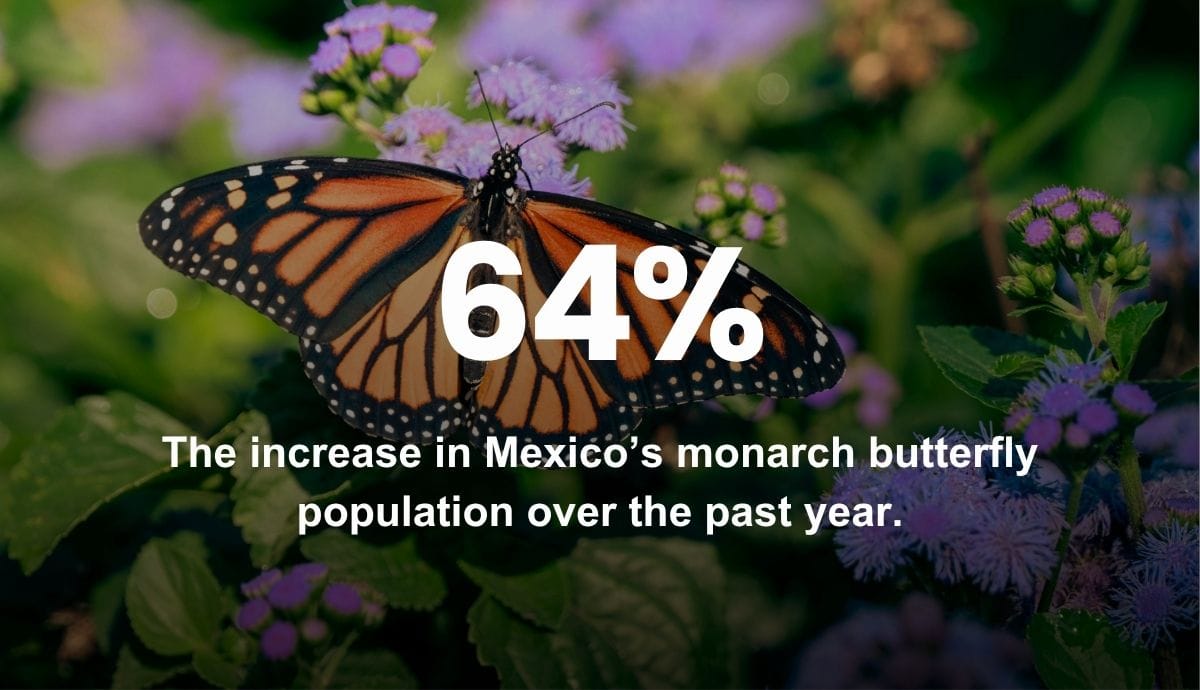
The population of eastern monarch butterflies in central Mexico increased by 64% over the past year, with the butterflies found covering an area spanning 7.24 acres, up from 4.42 acres last year. The annual survey by World Wildlife Fund-Mexico measures the area of forest in which monarch butterflies hibernate each winter, providing a reliable indicator of their population status.
WHY IT MATTERS
Eastern monarch butterflies migrate between Canada and Mexico each year, and while the present increase is welcome news, the population in Mexico is still well below historic norms. The current coverage is down from a peak of 45 acres in 1995 and well below the 15 acres scientists say is necessary for the butterflies’ survival. Recent data also suggests the western monarch population, which overwinters in California, has declined by more than 95% since the 1980s, numbering just 12,260 this past winter, the third lowest count on record and drastically below the millions needed to be considered a stable population.
CONNECT THE DOTS
In response to the declining monarch populations, President Joe Biden and his administration proposed listing the butterflies as threatened under the Endangered Species Act at the end of 2024, however, Trump officials ostensibly swayed by their corporate donors have delayed the decision indefinitely, instead designating it as a “long-term action” with no date for listing. The most recent assessment by the U.S. Fish & Wildlife Service found that within the next 60 years, eastern monarchs have up to a 74% chance of going extinct, while western monarchs face a greater than 99% chance of being lost.